The conversations

HIPHOPHISTORY

Sit-downs with the people who shaped the golden era — the stories behind the records, routines and block parties.

Park jams & purse money

The early NYC battles

Before diss records there were tapes. 4 of the crew-versus-crew nights that set the rules for everything after.

July 3, 1981

Cold Crush Brothers vs. Fantastic Romantic Five

The most famous MC crew battle of the pre-record era: Grandmaster Caz and the Cold Crush's hard-edged routines against Grand Wizzard Theodore's Fantastic Five and their sing-song harmonies.

Venue
Harlem World, 116th & Lenox, Manhattan
Stakes
$1,000 winner-take-all

By 1981 the Cold Crush Brothers (Caz, JDL, Easy AD, Almighty KG, DJ Charlie Chase and Tony Tone) and the Fantastic Romantic Five (Whipper Whip, Dot-A-Rock, Kevie Kev, Master Rob, Rubie Dee with Grand Wizzard Theodore) were the two biggest live draws in the Bronx and Harlem. Promoter Van Silk put up a $1,000 purse and packed Harlem World to settle it.

Cold Crush came with the harder material — tightly written group routines, harmonized song flips, and Caz's writing, widely considered the best in the city. The Fantastic Five came with charisma, matching outfits, crowd control and Theodore cutting behind them.

The judges gave it to the Fantastic Five on crowd response. Almost everyone who has heard the tapes since — and the tapes circulated on cassette for decades — argues Cold Crush had the better routines. That argument is the point: the battle became the standard both crews were measured against.

Verdict

Fantastic Five won on the night; Cold Crush won the tape.

Hear it

  • Cold Crush Brothers, 'Weekend' (Harlem World routine)
  • Cold Crush Brothers, 'Punk Rock Rap'
  • Fantastic Five, 'Can I Get a Soul Clap'

Watch / listen to the tapes

December 1981

Kool Moe Dee vs. Busy Bee Starski

Busy Bee was the undisputed crowd-rocker. Kool Moe Dee took the mic and dismantled him line by line, inventing the modern battle verse in the process.

Venue
Harlem World Christmas rap convention
Stakes
Reputation — and the definition of an MC

Busy Bee Starski owned the room with call-and-response party rhymes: 'Bee-bop-a-lula, she's my baby.' Nobody moved a crowd better, and nobody had ever really challenged him directly.

Kool Moe Dee of the Treacherous Three grabbed the mic afterward and delivered a targeted, written-in-advance dismantling — quoting Busy's own catchphrases back at him, mocking the biting, and demanding that an MC actually say something. 'Hold on Busy Bee, I don't mean to be bold, but put that ba-ditty-ba bulls*** on hold.'

The Harlem World tape spread across the five boroughs on dubbed cassettes. Overnight the job description changed: crowd control was no longer enough — an MC needed content, punchlines and the nerve to name an opponent.

Verdict

Moe Dee's verse is the origin point of the battle rap that runs through Roxanne Wars, the Bridge Wars and every diss record after.

Hear it

  • Kool Moe Dee, 'Let's Go' (Harlem World battle audio)
  • Treacherous Three, 'The New Rap Language'
  • Busy Bee, 'Making Cash Money'

Mid-to-late 1970s

The L Brothers vs. Kool Herc & the Herculords

The first generation's power struggle: Herc's monstrous Herculords sound system against the L Brothers' technique — Grand Wizzard Theodore, Mean Gene and Cordio, the crew where the scratch was born.

Venue
Bronx parks, PAL centers and the Sparkle / Executive Playhouse circuit
Stakes
The neighborhood, and whose system moved it

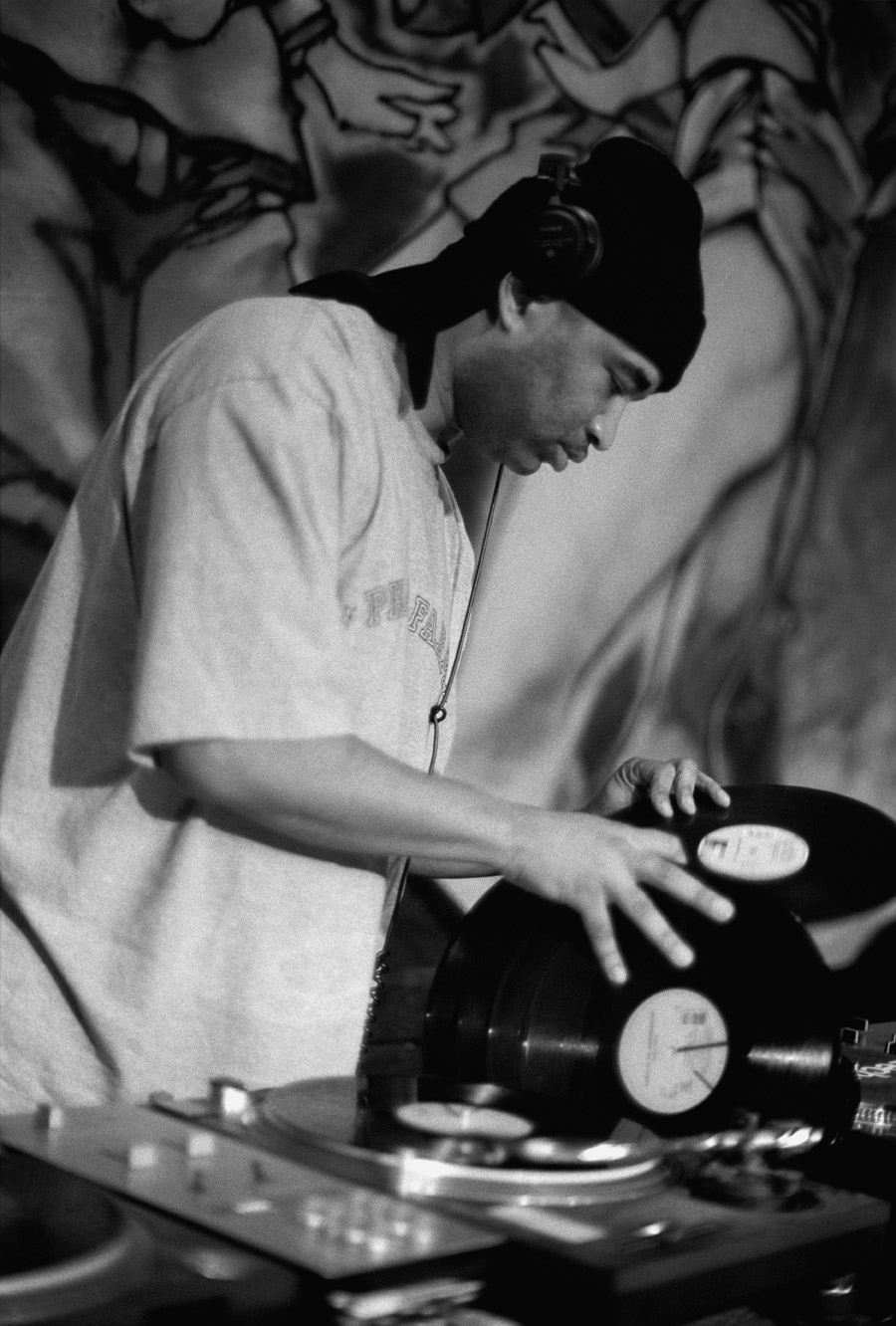
Kool Herc's edge was volume and selection. The Herculords rig — columns, a Shure PA head, crates of breaks nobody else had — could physically overwhelm a park. Herc kept his labels soaked off so no rival could bite his records.

The L Brothers came out of 63 Park with the opposite weapon: hands. Mean Gene's little brother Theodore had discovered the scratch and needle-drop in his bedroom, and Flash's quick-mix theory was circulating through the same crew. Where Herc played the break, they cut it.

The jams where the two systems set up on opposite ends of a park are the fault line of early hip hop. Herc's louder-is-better era gave way to a technical era, and by the turn of the '80s the DJs who could cut cleanly — Theodore, Flash, Bambaataa's Zulu DJs — were the ones drawing the crowd.

Verdict

No official verdict; the culture voted with its ears and moved from sound-system muscle to turntable technique.

Hear it

  • Incredible Bongo Band, 'Apache' — the shared battleground break
  • Grand Wizzard Theodore, 'Live Convention '81' routines
  • Grandmaster Flash, 'The Adventures of Grandmaster Flash on the Wheels of Steel'

Early 1980s

Force MCs vs. Cold Crush Brothers

Before they were the Force MDs and had a ballad on the radio, the Staten Island crew battled the Bronx's most feared routine group — with doo-wop harmony as their weapon.

Venue
Staten Island / Manhattan club dates
Stakes
Harmony vs. hardcore routines

The Force MCs — Stevie D, Trisco, Mercury, TCD and Jessie Lee — came off the Staten Island Ferry and out of the Manhattan street-corner circuit singing five-part harmony, then rhyming over it. Nobody in the Bronx was doing both at that level.

Cold Crush had already built their reputation on harmonized routines of their own, flipping records like 'Weekend' into group songs. Putting the two crews on the same bill was a direct test of who owned the sung-rap hybrid.

The Force MCs' advantage was that the singing was real — trained, tight and a cappella-proof. Cold Crush's advantage was Caz's pen and years of routine-building. The dates split, and both crews walked away with what they needed: Cold Crush kept the battle crown, and the Force MCs proved a rap group could sing.

Verdict

The Force MCs became the Force MDs, signed to Tommy Boy, and turned that hybrid into 'Tender Love' — the template for every singing rap group that followed.

Hear it

  • Force MDs, 'Let Me Love You'
  • Force MDs, 'Tender Love'
  • Cold Crush Brothers, 'Fresh, Wild, Fly and Bold'

Watch / listen to the tapes

The conversations

Interviews & features

Loading HIPHOPHISTORY…