The conversations

HIPHOPHISTORY

Sit-downs with the people who shaped the golden era — the stories behind the records, routines and block parties.

The architects

Founding fathers & first voices

31 bios of the DJs, MCs, producers and label builders who invented the culture between the Bronx park jams and the golden era.

Portrait of DJ Kool Herc
Photo via Wikimedia Commons
Role
DJ / founding father
Born
1955, Kingston, Jamaica
Base
West Bronx, New York
Active
1973–present

Clive Campbell

DJ Kool Herc

Clive Campbell moved from Kingston to the Bronx as a kid and carried the sound-system culture of Jamaica with him: big speakers, a mic, and a crowd. On August 11, 1973 he and his sister Cindy threw a back-to-school party in the rec room at 1520 Sedgwick Avenue. That night is the one historians point to as the birth of hip hop.

Herc's contribution was an idea, not a record. He noticed dancers only went off during the drum break, so he bought two copies of the same record and cut back and forth between the breaks — extending a five-second passage into five minutes. He called it the 'Merry-Go-Round,' and the dancers who lived for it became b-boys and b-girls.

He never chased a recording career. His legacy is the blueprint: the break as the foundation, the DJ as the architect, the party as the proving ground.

Essential

  • The 'Merry-Go-Round' break routine — James Brown, 'Give It Up or Turnit a Loose'
  • The Incredible Bongo Band, 'Apache' — the break Herc made sacred
  • 1520 Sedgwick Avenue, Aug 11 1973 — the party itself
Back to top
Portrait of Afrika Bambaataa
Photo via Wikimedia Commons
Role
DJ / Zulu Nation founder
Born
1957, Bronx, New York
Base
Bronx River Houses, New York
Active
1977–present

Lance Taylor

Afrika Bambaataa

A former Black Spades member, Bambaataa turned gang energy into cultural organization when he founded the Universal Zulu Nation in the late 1970s — the first institution to treat DJing, MCing, breaking and graffiti as one culture with a name and a code.

As a DJ he was famous for having no genre loyalty. Kraftwerk, Gary Numan, Yellow Magic Orchestra, calypso, rock, obscure European synth records — if it had a break, it played.

That omnivorous ear produced 'Planet Rock' in 1982 with the Soulsonic Force, welding Kraftwerk's 'Trans-Europe Express' melody to a Roland TR-808 pattern. Electro, Miami bass, Detroit techno and half of modern dance music trace back to it.

Essential

  • 'Planet Rock' (1982) — Soulsonic Force
  • 'Looking for the Perfect Beat' (1983)
  • 'Renegades of Funk' (1983)
Back to top
Portrait of Grandmaster Flash
Photo via Wikimedia Commons
Role
DJ / turntable technician
Born
1958, Bridgetown, Barbados
Base
South Bronx, New York
Active
1975–present

Joseph Saddler

Grandmaster Flash

If Herc had the idea, Flash built the machine. Trained in electronics and obsessed with his father's record collection, he engineered the techniques that turned two turntables into an instrument: the quick mix theory, the clock theory of marking a record with a crayon, backspinning, punch phrasing and the cross-fader cue system.

With the Furious Five he made hip hop a recording art. 'The Message' (1982) proved rap could carry journalism and dread; 'Adventures of Grandmaster Flash on the Wheels of Steel' (1981) was the first record to document turntablism itself.

In 2007 Grandmaster Flash and the Furious Five became the first hip hop act inducted into the Rock and Roll Hall of Fame.

Essential

  • 'The Adventures of Grandmaster Flash on the Wheels of Steel' (1981)
  • 'The Message' (1982) — with the Furious Five
  • 'Freedom' (1980)
Back to top
Portrait of Grand Wizzard Theodore
Photo via Wikimedia Commons
Role
DJ / inventor of the scratch
Born
1963, Bronx, New York
Base
South Bronx, New York
Active
1975–present

Theodore Livingston

Grand Wizzard Theodore

Theodore was a kid practicing too loud in his bedroom when his mother banged on the door. He held the record still under the needle to hear her — and heard a rhythm in the friction. That accident became the scratch, hip hop's signature sound.

He also refined the needle drop, dropping the stylus precisely onto the start of a break without cueing. Both techniques spread through the Bronx immediately and are still standard equipment for every DJ working today.

A member of the L Brothers and later the Fantastic Five, he appears in Wild Style, the film that exported the culture worldwide.

Essential

  • Wild Style (1983) — soundtrack and on-screen routines
  • 'Fantastic Freaks at the Dixie' — Wild Style
  • 'Subway Theme' (1983)
Back to top
Portrait of Grandmixer DST
Photo via Wikimedia Commons
Role
DJ / turntablist
Born
1960, Bronx, New York
Base
South Bronx, New York
Active
1976–present

Derek Showard / DXT

Grandmixer DST

Grandmixer DST came up in the Bronx alongside Bambaataa's Zulu Nation, running the Infinity Machine crew and building a reputation as one of the most inventive cutters of the late seventies park-jam circuit.

In 1983 he put scratching on the world stage: his solo on Herbie Hancock's 'Rockit' turned the turntable into a lead instrument on a Grammy-winning record, an MTV staple and a global hit. A generation of DJs picked up the crossfader because of that thirty seconds.

Later renamed DXT, he kept pushing the deck as an instrument through work with Bill Laswell, Material and Wild Style, and he is routinely cited as the man who made turntablism a recognized art form.

Essential

  • Herbie Hancock, 'Rockit' (1983) — the scratch solo
  • 'Crazy Cuts' (1983)
  • 'Home of Hip Hop' (1984)
Back to top
Portrait of Grandmaster Caz
Photo via Wikimedia Commons
Role
MC / DJ, Cold Crush Brothers
Born
1961, Bronx, New York
Base
South Bronx, New York
Active
1974–present

Curtis Fisher

Grandmaster Caz

Caz started as Casanova Fly, a DJ who became one of the first true writers in rap — building routines, choruses and character voices with the Cold Crush Brothers, the group that made crew battles legendary at Harlem World and the T-Connection.

His most famous verses were never credited to him. His rhyme book, borrowed by his manager Big Bank Hank, supplied lines to 'Rapper's Delight' — the first rap hit — and Caz received neither royalties nor a credit. It remains hip hop's defining lesson about ownership.

He kept working: writing, DJing, appearing in Wild Style, and serving as one of the culture's most reliable living historians.

Essential

  • Cold Crush Brothers, 'Fresh, Wild, Fly and Bold' (1984)
  • 'Weekend' (1982)
  • 'MC Delight' — his answer record to 'Rapper's Delight'
Back to top
No archival photo cleared
Role
MC / party rocker
Born
1962, Bronx, New York
Base
South Bronx, New York
Active
1977–present

David Parker

Busy Bee Starski

Busy Bee was the crowd's MC — the man who perfected the call-and-response party style, the 'Bay-bee!' chant, and the art of running a room with nothing but a mic and personality. He rode with the L Brothers, the Cold Crush Brothers and Afrika Bambaataa's Zulu Nation before going solo.

His 1981 battle against Kool Moe Dee at Harlem World is the most important battle in rap history: Moe Dee dismantled him line by line, and the loss shifted the culture from crowd-pleasing chants to written, technical lyricism. Busy Bee lost the night and changed the art form.

He kept working anyway — appearing in Wild Style and Beat Street, cutting 'Making Cash Money' with Marley Marl, and remaining one of the era's most beloved live personalities.

Essential

  • 'Making Cash Money' (1988)
  • 'Suicide' (1986)
  • Busy Bee vs Kool Moe Dee, Harlem World (1981)
Back to top
Portrait of Melle Mel
Photo via Wikimedia Commons
Role
MC, Furious Five
Born
1961, Bronx, New York
Base
South Bronx, New York
Active
1976–present

Melvin Glover

Melle Mel

Melle Mel is widely credited as the first to call himself an MC on record and the first great social writer in rap. His delivery — clipped, loud, marching — set the template for what an emcee was supposed to sound like on wax.

He wrote and led 'The Message,' a chronicle of poverty and pressure in the South Bronx that opened the door for every conscious record that followed, and followed it with 'White Lines (Don't Do It),' an anti-cocaine anthem that became a club staple.

He was inducted into the Rock and Roll Hall of Fame with the Furious Five in 2007 and remains one of the era's fiercest defenders of lyricism.

Essential

  • 'The Message' (1982)
  • 'White Lines (Don't Don't Do It)' (1983)
  • 'Beat Street Breakdown' (1984)
Back to top
Portrait of Kurtis Blow
Photo via Wikimedia Commons
Role
MC / producer
Born
1959, Harlem, New York
Base
Harlem, New York
Active
1976–present

Kurtis Walker

Kurtis Blow

Kurtis Blow was the first rapper signed to a major label — Mercury, 1979 — and the first to go certified gold, with 'The Breaks.' He turned a party trade into a professional career and proved the music had a national audience.

He was also an early architect behind the scenes, producing for the Fat Boys and Run-DMC (his DJ was Run, Joseph Simmons) and managed alongside Russell Simmons in the earliest days of Rush.

Later ordained as a minister, he still tours, teaches hip hop history and hosts radio, functioning as the era's ambassador.

Essential

  • 'The Breaks' (1980)
  • 'Christmas Rappin'' (1979)
  • 'If I Ruled the World' (1985)
Back to top
No archival photo cleared
Role
MC
Born
1963, Harlem, New York
Base
Harlem, New York
Active
1979–1990s

Gabriel Jackson

Spoonie Gee

Nephew of Enjoy Records founder Bobby Robinson, Spoonie Gee cut 'Spoonin' Rap' in 1979 — one of the very first rap records ever pressed, and the one that introduced the smooth, conversational, ladies-first style that ran counter to the crew-shouting of the day.

He is frequently called the original 'love rapper' and, in the same breath, an ancestor of gangster narrative: 'Spoonin' Rap' contains street-life storytelling years before the term existed.

His 1980 collaboration with the Treacherous Three, 'Love Rap,' is one of the most sampled early rap records, and 'The Godfather' with Marley Marl bridged old school and the coming golden era.

Essential

  • 'Spoonin' Rap' (1979)
  • 'Love Rap' (1980) — with the Treacherous Three
  • 'The Godfather' (1987)
Back to top
Portrait of Doug E. Fresh
Photo via Wikimedia Commons
Role
MC / human beat box
Born
1966, Barbados
Base
Harlem, New York
Active
1983–present

Douglas Davis

Doug E. Fresh

Doug E. Fresh made his own drum machine out of his mouth. Billed as the World's Greatest Entertainer, he built a whole performance language from beatboxing, breath control and crowd command — and he still outworks rooms half his age.

With Slick Rick as MC Ricky D and the Get Fresh Crew, he cut the 1985 double-sided single 'The Show' / 'La Di Da Di.' The latter, recorded with nothing but a voice and a beatbox, is among the most sampled records in music history.

He remains a constant presence in Harlem, on stages worldwide, and as one of the last showmen holding the live tradition of the era intact.

Essential

  • 'The Show' (1985)
  • 'La Di Da Di' (1985) — with Slick Rick
  • 'Keep Risin' to the Top' (1986)
Back to top
Portrait of Run-DMC
Photo via Wikimedia Commons
Role
Group / kings of rock
Born
1981, Hollis, Queens, New York
Base
Hollis, Queens, New York
Active
1981–present

Joseph Simmons, Darryl McDaniels, Jason Mizell

Run-DMC

Run-DMC came out of Hollis, Queens with a sound that stripped hip hop down to its hardest elements: drum machine, rhymes, and a DJ. Run and DMC rapped in tandem, trading lines like a tag team, while Jam Master Jay cut, scratched and held the stage together.

Their 1983 single 'It's Like That' / 'Sucker MCs' was minimal and loud — no bass line, no chorus, just a drum machine and two voices announcing that the old party-rap era was over. Their 1984 debut album was the first hip hop record to go gold, and 1985's King of Rock made them the first rap act to play Live Aid.

Raising Hell (1986), produced by Rick Rubin and Russell Simmons, broke the genre wide open with 'Walk This Way,' a collaboration with Aerosmith that put rap on MTV and in stadiums. They were the first rap group to go platinum, and the first to make Adidas, fedoras and gold chains the visual language of hip hop.

Essential

  • 'It's Like That' / 'Sucker MCs' (1983)
  • Raising Hell (1986)
  • 'Walk This Way' with Aerosmith (1986)
Back to top
Portrait of The Sugarhill Gang
Photo via Wikimedia Commons
Role
Group / first rap hit
Born
1979, Englewood, New Jersey
Base
Englewood, New Jersey
Active
1979–present

Wonder Mike, Big Bank Hank, Master Gee

The Sugarhill Gang

Three unknowns — Wonder Mike, Big Bank Hank and Master Gee — were assembled by Sylvia Robinson in New Jersey in 1979 and cut 'Rapper's Delight' over a live band replaying Chic's 'Good Times.' Fifteen minutes long, made in one afternoon, it became the record that told the world rap existed.

The Bronx crews who had built the culture were furious: the group had not come up through the park jams, and Hank's verses came out of Grandmaster Caz's rhyme book. The song still sold millions worldwide and turned a live party form into a recorded industry.

They followed with '8th Wonder' and 'Apache,' both staples of early hip hop radio, and remain the commercial starting gun for everything that came after.

Essential

  • 'Rapper's Delight' (1979)
  • '8th Wonder' (1980)
  • 'Apache' (1981)
Back to top
Portrait of The Furious Five
Photo via Wikimedia Commons
Role
Group / MC crew with Grandmaster Flash
Born
1978, Bronx, New York
Base
South Bronx, New York
Active
1978–1988

Melle Mel, Kidd Creole, Scorpio, Rahiem, Cowboy

The Furious Five

Behind Grandmaster Flash's turntables stood five MCs who invented the group routine: Melle Mel, Kidd Creole, Scorpio, Rahiem and Cowboy — the man credited with coining the word 'hip hop' itself and with the crowd calls every rap show still uses.

They passed lines between each other in choreographed relay, harmonized, and turned the Bronx crew battle into stagecraft. On Sugar Hill they made 'Freedom,' 'The Message' and 'White Lines,' records that carried rap from party chant into social reporting.

In 2007 they became the first hip hop act inducted into the Rock and Roll Hall of Fame.

Essential

  • 'Freedom' (1980)
  • 'The Message' (1982)
  • 'White Lines (Don't Don't Do It)' (1983)
Back to top
Portrait of The Cold Crush Brothers
Photo via Wikimedia Commons
Role
Group / battle crew
Born
1978, Bronx, New York
Base
South Bronx, New York
Active
1978–present

Grandmaster Caz, JDL, Easy AD, Almighty KG, DJ Tony Tone, DJ Charlie Chase

The Cold Crush Brothers

The Cold Crush Brothers — four MCs and two DJs, including the Puerto Rican pioneer Charlie Chase — were the most feared routine crew in New York, famous for harmonized hooks, rock and pop melodies flipped into rap, and airtight showmanship.

Their 1981 battle against the Fantastic Five at Harlem World is the most bootlegged tape in hip hop history, traded on cassette for decades before anybody thought to release it.

They appeared in Wild Style and shaped how a rap group is supposed to sound live: written, rehearsed, and impossible to follow.

Essential

  • 'Fresh, Wild, Fly and Bold' (1984)
  • 'Weekend' (1982)
  • Cold Crush vs Fantastic Five, Harlem World (1981)
Back to top
No archival photo cleared
Role
Group / first crew with a woman MC
Born
1976, Bronx, New York
Base
South Bronx, New York
Active
1976–1983

Sha-Rock, K.K. Rockwell, Keith Keith, Rahiem, DJ Breakout, Baron

The Funky Four + 1

The Funky Four + 1 were the first rap group with a female member — MC Sha-Rock, the '+1,' widely called the first lady of hip hop — and one of the first crews of any kind signed to a label, cutting 'Rappin and Rocking the House' for Enjoy in 1979.

Their Sugar Hill single 'That's the Joint' (1980) is one of the most beloved records of the era, a seven-minute relay of interlocking voices over a rolling bassline.

In 1981 they became the first rap act ever to perform on national television, appearing on Saturday Night Live at Debbie Harry's invitation.

Essential

  • 'That's the Joint' (1980)
  • 'Rappin and Rocking the House' (1979)
  • Saturday Night Live, February 1981 — first rap performance on network TV
Back to top
No archival photo cleared
Role
Group / first female rap group on record
Born
1979, Columbia, South Carolina
Base
Columbia, South Carolina
Active
1979–1985

Angie Stone, Cheryl the Pearl, Blondy

The Sequence

Three high school friends from South Carolina — Angie Brown (later the soul singer Angie Stone), Cheryl Cook and Gwendolyn Chisolm — talked their way backstage at a Sugarhill Gang show, auditioned for Sylvia Robinson on the spot, and were signed that night.

'Funk You Up' (1979) made them the first female rap group to release a record, and one of the earliest rap records period. Their blend of sung hooks and rapped verses predicted decades of the form.

Dr. Dre rebuilt 'Funk You Up' into 'Keep Their Heads Ringin'' and Mark Ronson and Bruno Mars interpolated it on 'Uptown Funk,' keeping the group's sound in rotation forty years on.

Essential

  • 'Funk You Up' (1979)
  • 'Funky Sound (Tear the Roof Off)' (1980)
  • 'I Don't Need Your Love' (1982)
Back to top
Portrait of The Force MDs
Photo via Wikimedia Commons
Role
Group / rap-and-harmony pioneers
Born
1981, Staten Island, New York
Base
Stapleton, Staten Island
Active
1981–present

Stevie D, Trisco, Mercury, TCD, Jessie Lee Daniels

The Force MDs

Formed on Staten Island as the Force MCs, they worked the ferry and street corners doing doo-wop harmony, human beatbox and rap in the same set — a combination nobody else was attempting in the early eighties.

Signed to Tommy Boy, they made slow jams built by a rap crew: 'Tender Love,' written by Jimmy Jam and Terry Lewis for the Krush Groove soundtrack, and 'Love Is a House.'

They proved hip hop could sing, and the new jack swing groups that followed borrowed their template wholesale.

Essential

  • 'Tender Love' (1985)
  • 'Love Is a House' (1987)
  • 'Itchin' for a Scratch' (1984)
Back to top
Portrait of Sylvia Robinson
Photo via Wikimedia Commons
Role
Producer / label founder, Sugar Hill Records
Born
1935–2011, Harlem, New York
Base
Englewood, New Jersey
Active
1950s–2011

Sylvia Vanderpool

Sylvia Robinson

Before hip hop, Sylvia Robinson was already a hit maker — half of Mickey & Sylvia ('Love Is Strange'), then a solo star with the 1973 slow burner 'Pillow Talk.' She was a businesswoman and producer in an industry that had almost no room for either from a Black woman.

In 1979 she heard rappers at a club in Harlem, assembled three unknowns in New Jersey, and put out 'Rapper's Delight' on her own Sugar Hill Records. It sold millions and made rap a commercial genre overnight.

She then signed Grandmaster Flash and the Furious Five and pushed 'The Message' into the world. She is fairly called the mother of hip hop records — the first person to see the format's commercial future clearly.

Essential

  • The Sugarhill Gang, 'Rapper's Delight' (1979) — produced by Robinson
  • Grandmaster Flash & the Furious Five, 'The Message' (1982)
  • Sylvia, 'Pillow Talk' (1973)
Back to top
Portrait of Russell Simmons
Photo via Wikimedia Commons
Role
Manager / co-founder, Def Jam Recordings
Born
1957, Queens, New York
Base
Hollis, Queens, New York
Active
1977–present

Russell Simmons

Simmons began promoting parties in Queens and managing acts through Rush Productions — Kurtis Blow, Whodini, and his younger brother Joseph's group, Run-DMC. His instinct was that rap should not be dressed up for radio; it should sound and look like the street it came from.

In 1984 he partnered with NYU student Rick Rubin to run Def Jam out of a dorm room. Within three years the label had LL Cool J, the Beastie Boys and Public Enemy, and hip hop had crossed into the mainstream on its own terms.

He went on to build Phat Farm and Def Comedy Jam, turning the culture into an industry with fashion, television and touring arms.

Essential

  • Run-DMC, 'Rock Box' (1984) — the guitar-rap crossover
  • LL Cool J, Radio (1985)
  • Def Jam's first release: T La Rock & Jazzy Jay, 'It's Yours' (1984)
Back to top
Portrait of Rick Rubin
Photo via Wikimedia Commons
Role
Producer / co-founder, Def Jam Recordings
Born
1963, Long Beach, New York
Base
New York City
Active
1984–present

Rick Rubin

Rubin arrived from a punk band and applied punk logic to rap production: strip it down, turn it up, remove everything that isn't the hit. His records were drum machine, scratch, and voice — brutally dry and enormous.

From an NYU dorm he made 'It's Yours' with T La Rock and Jazzy Jay, then produced LL Cool J's Radio, the Beastie Boys' Licensed to Ill, Run-DMC's Raising Hell and Public Enemy's early sides. The Run-DMC and Aerosmith 'Walk This Way' collision was his idea of an obvious move.

He left Def Jam in 1988 for Def American and became one of the most decorated producers alive, but his hip hop years defined the sound of the mid-eighties.

Essential

  • Run-DMC, Raising Hell (1986)
  • Beastie Boys, Licensed to Ill (1986)
  • LL Cool J, 'Rock the Bells' (1985)
Back to top
Portrait of DJ Jazzy Jay
Photo via Wikimedia Commons
Role
DJ / producer, Zulu Nation
Born
1961, Bronx, New York
Base
Bronx River Houses, New York
Active
1977–present

John Byas

DJ Jazzy Jay

Jazzy Jay came up under Afrika Bambaataa in the Zulu Nation, one of the Bronx DJs whose crates and hands defined what a park jam sounded like at the turn of the eighties.

He is the connective tissue between the Bronx and Def Jam: he co-produced 'It's Yours' with Rick Rubin, the record that carried the Def Jam logo before the label properly existed, and he brought Rubin into the culture's inner circle.

He later built his own studio and mentored a generation of producers, staying a working DJ rather than chasing celebrity.

Essential

  • T La Rock & Jazzy Jay, 'It's Yours' (1984)
  • 'Def Jam' (1985)
  • Zulu Nation park jams, Bronx River, 1979–82
Back to top
Portrait of Rakim
Photo via Wikimedia Commons
Role
MC, Eric B. & Rakim
Born
1968, Wyandanch, New York
Base
Long Island, New York
Active
1985–present

William Griffin Jr.

Rakim

Rakim ended the old school by changing what a rhyme could be. Where MCs had shouted on the beat in four-bar bursts, he wrote in internal rhyme, multisyllables and jazz phrasing, delivered cold and calm.

Paid in Full (1987) with Eric B. is one of the most influential albums in the genre, and its Coldcut remix of the title track helped invent sample-driven dance production abroad.

Nearly every technical rapper since — Nas, Jay-Z, Kendrick — cites him as the standard. He is usually the first name on any credible greatest-MC list.

Essential

  • 'Eric B. Is President' (1986)
  • Paid in Full (1987)
  • 'Follow the Leader' (1988)
Back to top
Portrait of Big Daddy Kane
Photo via Wikimedia Commons
Role
MC, Juice Crew
Born
1968, Brooklyn, New York
Base
Bedford-Stuyvesant, Brooklyn
Active
1986–present

Antonio Hardy

Big Daddy Kane

Kane combined two things that rarely coexist: the fastest, most intricate breath control of the late eighties and the smoothest ladies-man persona in the business. Fades, silk suits, dancers — and then 'Raw.'

A Juice Crew member who wrote for Biz Markie and Roxanne Shanté, he worked closely with Marley Marl on Long Live the Kane, a cornerstone of the golden era.

He is a working reference point for battle rappers three decades later, and one of the culture's great live performers.

Essential

  • 'Raw' (1987)
  • Long Live the Kane (1988)
  • 'Ain't No Half-Steppin'' (1988)
Back to top
Portrait of Roxanne Shanté
Photo via Wikimedia Commons
Role
MC, Juice Crew
Born
1969, Queens, New York
Base
Queensbridge Houses, Queens
Active
1984–1990s

Lolita Shanté Gooden

Roxanne Shanté

At fourteen, Shanté freestyled 'Roxanne's Revenge' over UTFO's instrumental in a single take and launched the Roxanne Wars — over a hundred answer records, the first great recorded battle in hip hop.

She proved a teenage girl from Queensbridge could out-rhyme grown men on wax, and she did it with Marley Marl on the boards, helping establish the Juice Crew and Queens as a power base.

Her career was cut short by industry politics, but her influence on every woman who picked up a mic afterward is direct and undeniable.

Essential

  • 'Roxanne's Revenge' (1984)
  • 'Have a Nice Day' (1987)
  • 'Big Mama' (1992)
Back to top
Portrait of LL Cool J
Photo via Wikimedia Commons
Role
MC
Born
1968, Bay Shore, New York
Base
Hollis, Queens, New York
Active
1984–present

James Todd Smith

LL Cool J

A sixteen-year-old from Queens mailed a demo to a dorm room and became Def Jam's first star. Radio (1985) was the label's first album and the first proof that a solo rapper could carry one.

He then did something nobody had: made rap ballads. 'I Need Love' opened a commercial lane that never closed, while 'Rock the Bells' and 'Mama Said Knock You Out' kept his battle credentials intact.

Four decades in, he is still recording, still touring, and the first rapper inducted into the Rock and Roll Hall of Fame as a solo artist.

Essential

  • 'I Can't Live Without My Radio' (1985)
  • 'I Need Love' (1987)
  • 'Mama Said Knock You Out' (1990)
Back to top
Portrait of Fab Five Freddy
Photo via Wikimedia Commons
Role
Graffiti artist / host / cultural broker
Born
1959, Brooklyn, New York
Base
Bedford-Stuyvesant, Brooklyn
Active
1977–present

Fred Brathwaite

Fab Five Freddy

Freddy was the bridge between the uptown block party and the downtown art world — a graffiti writer who showed with Basquiat's circle, got name-checked in Blondie's 'Rapture,' and helped produce Wild Style.

As the first host of Yo! MTV Raps he put hip hop on television every day, which more than any single record made the culture national and then global.

He remains one of its sharpest documentarians, curating and directing work on graffiti, jazz and the era he helped export.

Essential

  • Wild Style (1983) — co-producer and cast
  • Blondie, 'Rapture' (1981) — the name-check
  • Yo! MTV Raps (1988–) — original host
Back to top
No archival photo cleared
Role
Radio DJ / Rap Attack host
Born
1956, Brooklyn, New York (d. 2009)
Base
Brooklyn, New York
Active
1979–1990s

John Rivas

Mr. Magic

Before hip hop had a radio home, Mr. Magic bought his own airtime. In 1979 he paid for a slot on WHBI and launched 'Rap Attack' — the first commercial radio show in the world dedicated entirely to hip hop.

In 1983 he moved to WBLS with Marley Marl as his DJ, and 'Mr. Magic's Rap Attack' became appointment listening across the five boroughs. Getting your record played by Magic could break it; getting dismissed on air could bury it. His catchphrase — 'Magic's on the radio, in stereo' — was the sound of Friday night in New York.

He was the on-air general of the Juice Crew, which made him the flashpoint of the Bridge Wars when he backed MC Shan against Boogie Down Productions. When he died in 2009, every New York DJ who came after acknowledged the debt.

Essential

  • 'Mr. Magic's Rap Attack' — WHBI (1979) and WBLS (1983)
  • Whodini, 'Magic's Wand' (1982) — the tribute record
  • Marley Marl & MC Shan, 'Marley Marl Scratch' (1985)
Back to top
Portrait of DJ Marley Marl
Photo via Wikimedia Commons
Role
DJ / producer, Juice Crew
Born
1962, Queens, New York
Base
Queensbridge Houses, Queens
Active
1983–present

Marlon Williams

DJ Marley Marl

Marley Marl changed how rap records are made. Working a session in the early 1980s, he accidentally sampled a snare into a drum machine and realized he could sequence real James Brown drums instead of programming synthetic ones. That accident became the sampled break — the foundation of every boom bap record that followed.

As Mr. Magic's DJ on 'Rap Attack' and the producer behind the Juice Crew, he built a roster nobody has matched: Big Daddy Kane, Biz Markie, Kool G Rap, Roxanne Shanté, MC Shan and Masta Ace, all working out of his Queensbridge apartment studio.
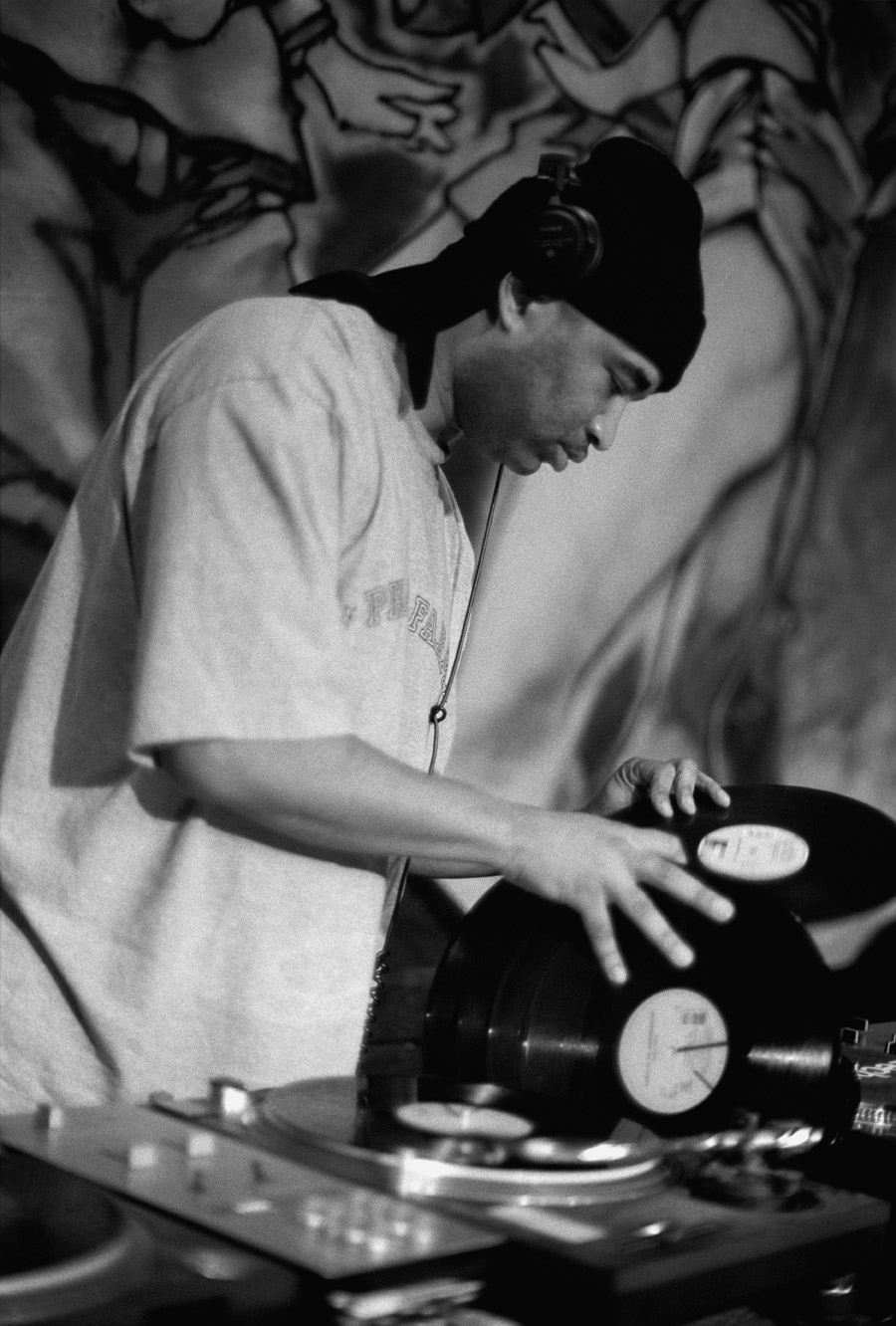
His fingerprints run through the next generation too — the drums on Eric B. & Rakim's Paid in Full, LL Cool J's Mama Said Knock You Out, and the template Pete Rock, Large Professor and DJ Premier all built on.

Essential

  • MC Shan, 'The Bridge' (1986)
  • Marley Marl, 'The Symphony' (1988) — Juice Crew posse cut
  • LL Cool J, 'Mama Said Knock You Out' (1990) — produced by Marley
Back to top
Portrait of Kool DJ Red Alert
Photo via Wikimedia Commons
Role
Radio DJ / Zulu Nation
Born
1956, Harlem, New York
Base
The Bronx, New York
Active
1983–present

Frederick Crute

Kool DJ Red Alert

Red Alert learned from Afrika Bambaataa and the Zulu Nation, then took that Bronx ear to KISS-FM in 1983. For a generation of New Yorkers, Saturday night meant a blank tape in the deck waiting for the Propmaster to drop something nobody else had.

He was the radio home of Boogie Down Productions during the Bridge Wars, and the first major platform for the Native Tongues — Jungle Brothers (his nephew Mike G was a member), De La Soul, A Tribe Called Quest.

Decades on he is still on air and still a Zulu Nation elder, credited by everyone from KRS-One to Q-Tip as the DJ who put them on.

Essential

  • Kool DJ Red Alert's Propmaster Dancehall Show — KISS-FM mixes
  • Jungle Brothers, 'Straight Out the Jungle' (1988) — his co-sign
  • Boogie Down Productions, 'South Bronx' (1986) — broken on his show
Back to top
No archival photo cleared
Role
Radio DJ / producer
Born
1962, Bronx, New York
Base
The Bronx, New York
Active
1982–present

Charles Turner

Chuck Chillout

Chuck Chillout came up spinning in Bronx parks and became one of the first hip hop DJs on commercial New York radio, holding down KISS-FM alongside Red Alert through the mid-1980s — the two shows that decided which records the city heard.

He was a technician's DJ: tight cuts, deep crates, and mixes taped and traded so widely they functioned as an underground distribution network before mixtapes were an industry.

He also produced, most notably with Kool Chip as Chuck Chillout & Kool Chip, and later helped launch Hot 97's rap programming. Ask any New York DJ over fifty who taught them show structure and his name comes up.

Essential

  • Chuck Chillout & Kool Chip, 'Rhythm Is the Master' (1989)
  • 'Hip Hop on Wax' volumes (1985–86)
  • The KISS-FM mix shows — the tapes that traveled the boroughs
Back to top

The conversations

Interviews & features

Loading HIPHOPHISTORY…